
Procrastination the silent killer of your life.
Procrastination is the silent killer of success. Find out why we delay things and how to overcome this life-ruining habit.
10/9/2025
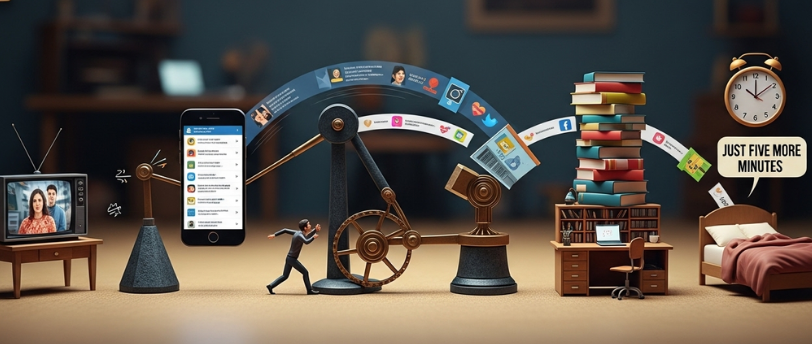

Have you ever intended to start an important task, but instead you start checking your phone or promise yourself, “I’ll start in five minutes”? This habit is called procrastination. It may seem trivial, but it can negatively affect your performance, peace of mind, and even relationships.
What Is Procrastination?
Procrastination is the habit of repeatedly postponing an important or necessary task, even though the person knows that it will have negative consequences. This is not laziness, but is often due to fear, pressure, or lack of interest. According to psychologists, it is a self-regulation failure — that is, the person sacrifices future benefits for temporary comfort.
Psychological aspects
Procrastination is the result of a conflict between two parts of our brain:
Limbic System: which processes emotions and immediate gratification.
Prefrontal Cortex: which is associated with planning and long-term decisions.
When the Limbic System dominates, a person chooses easy and enjoyable tasks and avoids difficult or responsible tasks. According to Dr. Piers Steel, about 95 percent of people procrastinate to some degree, and 20 percent of people suffer from this habit on a regular basis.
Why do people procrastinate?
Fear of failure: It becomes an excuse not to work so as not to face failure.
Perfectionism: We want to make everything perfect, so we don't start.
Feeling overwhelmed: The task seems big or difficult, so the mind stops itself.
Lack of motivation: If the goal is not clear, the mind prefers to procrastinate.
Poor time planning: Work is delayed due to lack of priorities.
Unnecessary engagements: Social media and phones distract us.
Disadvantages of Procrastination
Procrastination provides temporary relief, but its consequences are harmful in the long run:
Mental stress and anxiety
Decreased performance
Lost confidence and loss of reputation
Missed opportunities
Sleep and health problems
Types of Procrastinators
Perfectionist: Wants to make everything perfect.
Dreamer: Makes plans but doesn't act.
Worrier: Doesn't do anything for fear of making mistakes.
Crisis-Maker: Completes tasks at the last minute.
Overdoer: Gives up everything in an attempt to do too much.
Ways to overcome procrastination
1. Break down tasks into smaller chunks
Break down large tasks into smaller chunks so that you don’t feel overwhelmed.
2. Adopt the “two-minute rule”
If something can be done in two minutes, do it right away. This habit builds momentum.
3. Eliminate distractions
Get away from your phone, notifications, and unnecessary noise.
4. Set clear deadlines
Set yourself a deadline so that the goal is clear in your mind.
5. Reward yourself
Give yourself a small reward after each successful step. This encourages the brain to form positive habits.
6. Identify your weaknesses
Understand why you procrastinate — fear, boredom, or exhaustion — and overcome them.
7. Be gentle with yourself, not hard on yourself
If you’ve procrastinated, start over instead of beating yourself up. Research has shown that self-forgiveness improves performance.
--------------------------------------------
Get the cheapest Writing Plans
--------------------------------------------

